

nitya sandesh beuro
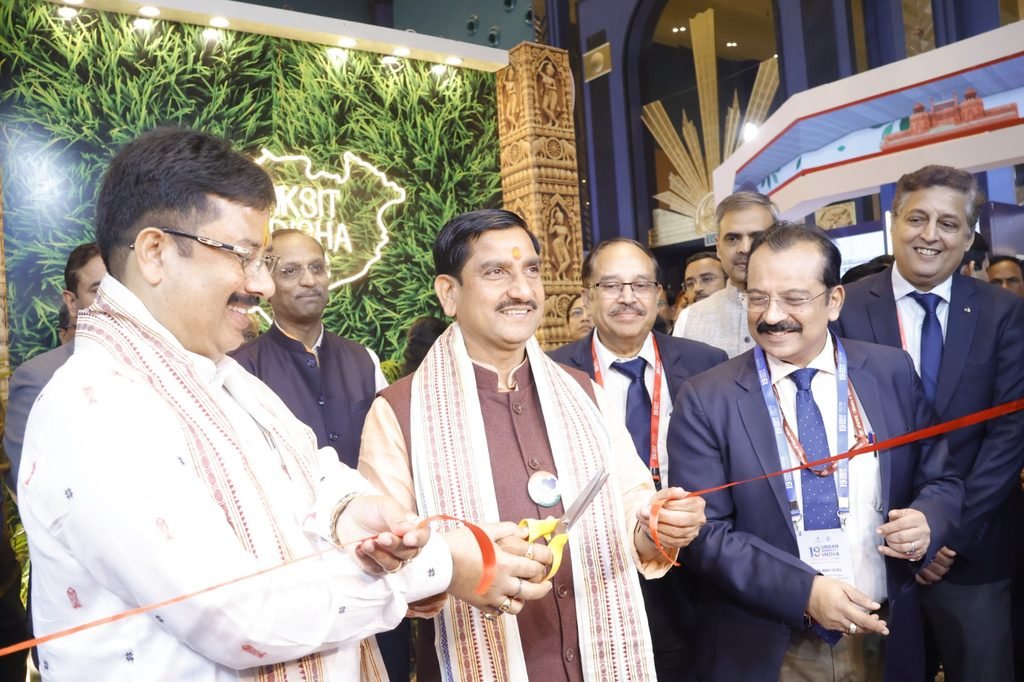
new delhi. Shri Tokhan Sahu, Hon’ble Union Minister of State for Housing and Urban Affairs, Government of India, inaugurated the exhibition stall of the National Capital Region Transport Corporation (NCRTC) at the 19th Urban Mobility India (UMI) Conference and Expo 2026, being held from 23rd to 24th October in Bhubaneswar, Odisha.
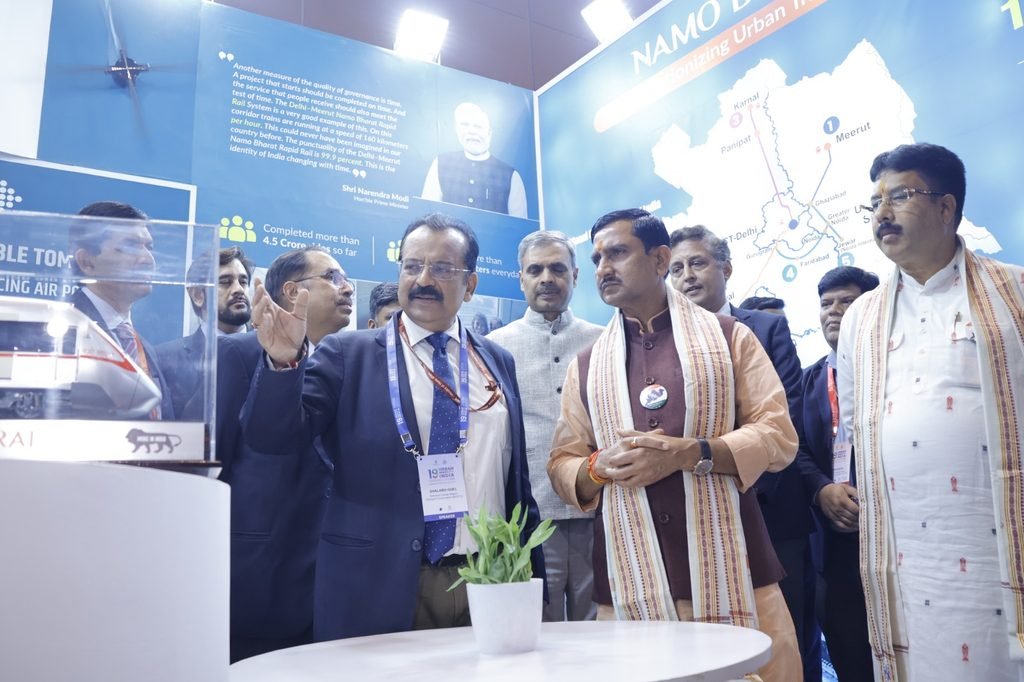
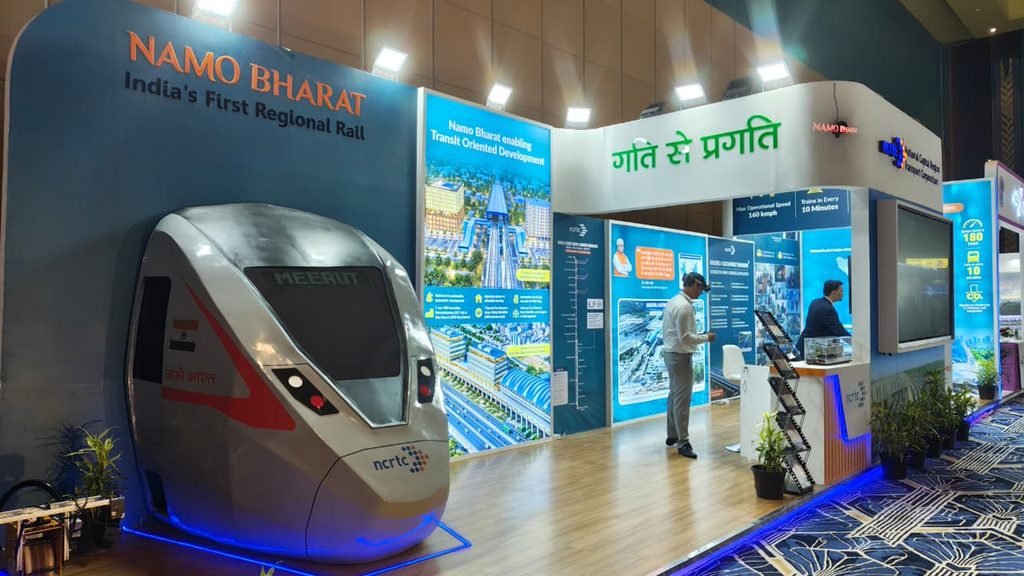
At the NCRTC stall, Shri Tokhan Sahu, Hon’ble MoS, MoHUA; Dr. Krushna Chandra Mahapatra, Hon’ble Minister for Housing and Urban Development & Public Enterprises, Government of Odisha; Shri Satendra Singh, Secretary, Department of Urban Development, MoHUA, and other dignitaries were welcomed by Shri Shalabh Goel, Managing Director, NCRTC along with other senior management who showcased the modern, commuter-centric features of Namo Bharat, India’s First Regional Rail system alongside the transformation that this project has brought.
Since commencement of operations on its priority section in October, 2023, Namo Bharat has emerged as a preferred mode of transport for commuters travelling across the Delhi–Ghaziabad–Meerut corridor, offering faster, safer and more comfortable regional connectivity. The growing adoption of the service is reflected in the corridor having recorded over 4.5 crore passenger journeys, benefiting more than one lakh commuters every day.
The success of Namo Bharat also highlights the potential of the Regional Rapid Transit System (RRTS) model for replication in other regions of the country. The semi-high speed regional mobility model which is enhancing travel experience for people intending to travel longer distances with fewer stops, has also drawn interest from other state governments. Nearly 2,900 kilometres of potential Namo Bharat corridors have been identified across major regional clusters in the country, signalling a push towards developing mega-regions as new engines of economic growth in the Economic Survey 2025-26, underscoring the importance of these corridors.
The exhibition showcases the evolution of the Delhi–Ghaziabad–Meerut Namo Bharat corridor, which spans 82 km with 15 stations, alongside the integration of Meerut Metro services over the same infrastructure. It also highlights NCRTC’s efforts to promote Transit-Oriented Development (TOD), which integrates transport infrastructure with planned urban development around transit stations. Through this approach, Namo Bharat is envisioned as more than a regional transport system, enabling balanced and sustainable urban growth, improving access to affordable housing and encouraging the development of well-connected residential, commercial and mixed-use spaces. Proposed developments around Duhai Namo Bharat station and Sarai Kale Khan, along with planned TOD townships at Harnandipuram and New Meerut, demonstrate how integrated transport and land-use planning can create more accessible, liveable and sustainable urban regions.
This year’s UMI event is being jointly organised by the Ministry of Housing and Urban Affairs (MoHUA), Government of India, and the Government of Odisha. The 2026 edition focuses on the theme ‘Urban Accessibility and Liveability in Digital Age’, with an emphasis on improving urban accessibility, integrating transport infrastructure and enhancing the quality of urban life through emerging digital technologies. The two-day event brings together policymakers, transport authorities, industry representatives, technology providers and experts to exchange knowledge and explore solutions for sustainable and efficient mobility. NCRTC’s stall, featuring interactive models, detailed information, and visual displays, is attracting interest from visitors by showcasing the transformative design, advanced technology and commuter-centric innovations of the Namo Bharat system. The NCRTC stall is also offering visitors a first-hand experience of how the two technologies, Augmented Reality (AR) and Virtual Reality (VR), are being extensively used for Development and Maintenance of the Namo Bharat system.
Through its expanding network, integration with other modes of transport and focus on transit-oriented development, NCRTC is demonstrating how modern regional mobility infrastructure can contribute to more connected, accessible and sustainable urban regions.